Political Communication

Of all of the fields of communication, political communication is perhaps the most frequently analyzed and one of the most important on a global stage. In this section of our blog, we will look at the ways that communication influences politics. Through the study of political communication, we can understand how the 24-hour news cycle and various types of new communication can affect election campaigns and policy. We will look at the latest research and analyses to see how political communication has changed due to new mass media technologies such as the Internet. We will look at recent surveys to show how these technologies influence voters, and we will see how voters subsequently influence the campaigns and governance of their elected officials.
We're collecting info on the communication degree. COMS students, graduates, and professors take the survey.
mind-control-cropped

3 Nonverbal Hacks to Improve Your Credibility

Credibility is everything. Newspapers that get the facts wrong are torn to shreds and politicians lacking experience don’t get elected, while people in lab coats command our respect immediately. Communication scholars define credibility as being the perception of one’s competence, trustworthiness, and goodwill. But as you probably know, perceptions can be hacked. Read more »

barack-obama-speaking

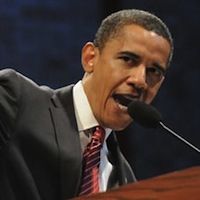
Deep-Voiced Politicians Favored by Voters [Study]

According to a report published in the Proceedings of the Royal Society B, voters may naturally prefer politicians who have deeper voices. Biologists from Duke University collaborated with a political scientist from the University of Miami to determine voter preferences regarding the pitch of a candidate’s voice. Read more »

reading_computer

Confirmation Bias Is False, Says Study

A study suggests the thought that political partisans only immerse themselves in media which reinforce their beliefs may be unfounded. They discovered that even the most partisan readers visit mainstream news sites, as well as partisan sites that express views that oppose their own. Read more »

Attractive Politicians Get More Television Coverage [Study]

Even in politics, good looks open a lot of doors. A study conducted by the University of Haifa found that the amount of television coverage a member of congress gets is directly proportional to how attractive he or she is perceived to be. Read more »

How Effective are Smear Campaigns?

In the center of the political limelight is 2012 Presidential Candidate Herman Cain as he fights off allegations of past sexual infidelity and sexual harassment. The story has leaked out bit by bit, with new accusers coming from different directions and casting even more of a negative shadow on Cain. In his defense, Cain has turned around and pointed a finger at Texan rival Governor Rick Perry claiming that he is conducting a smear campaign against him to try to whittle his chances of receiving the GOP nomination presidency. Read more »

In the Media, Protests More Influential than Presidents [Study]

A new study out of Michigan State University shows that greater media coverage of Washington politicians does not translate into greater influence on the public. Americans are much more likely to respond to stories of political grassroots efforts led by average citizens, even though such stories are few compared to those chronicling congressional debates and speeches. Read more »

Newspaper Endorsements Influence Voters [Study]

Voters might like to think that they cannot be swayed by the influence of media endorsements, but Brian Knight and Chun Fang Chiang, researchers at Brown University, recently published a study in The Review of Economic Studies which states that media endorsements do have a significant effect of the decisions of voters. Read more »