Rhetorical Studies

Rhetorical studies show how word choice, phrasing, logic and even body language can affect discourse. In an increasingly Internet-driven society, the art of rhetoric is especially important. We now have more opportunities to control our language. The ability to give a good speech or presentation is highly valued, as a good performance can easily "go viral" and be seen by millions of people around the world. We will use this section of our blog to look at logical arguments, theory, analyses, research and news related to rhetorical study. By improving your awareness of things like word choice and logical arguments, you can improve your own speeches or build a stronger critical understanding of how rhetoric shapes politics, interpersonal communication skills and the modern world.
language-and-perception

How Language and Perception Change Each Other [Video]

One of the most powerful weapons a politician has is their words. By controlling language they can shape perceptions. Just think of the effect a phrase like “estate tax” has when turned to “death tax.” Far more powerful, right? In this TED Talk, Etymologist Mark Forsyth walks us through some historical examples of how politicians [...] Read more »

yelp-reviews

Performance of Literature…I Mean Yelp?

ATTENTION COMMUNICATION STUDENTS: If you are currently taking a Performance of Literature class, there may be a style of literature your professor forgot to tell you was appropriate: Yelp reviews. In these videos, actors take Yelp reviews and turn them into dramatic monologues. The first video has SVU actress Therese Plummer give a graphic and [...] Read more »

obama-aurora

President Obama’s Aurora Speech Highlights the Bravery of Stephanie Davies

On Sunday evening following the horrible tragedy that took place at the the ‘Dark Knight’ premiere, President Obama addressed the nation from Aurora, Colorado. Comforting a country — especially following one of the worst mass shootings in U.S. history — is no easy task, but Obama does his best by highlighting a heroine rather than [...] Read more »

rhetological-fallacies

Rhetological Fallacies: Errors and Manipulations of Rhetoric and Logical Thinking

In the course of any argument or discussion, good communicators need to know how to avoid logical fallacies. Logical fallacies weaken an argument by treating a false assumption as fact, but because many speakers and writers don’t take the time to consider the basis of their arguments, logical fallacies are fairly common in politics, business [...] Read more »

dating-tips-greek-philosophers-comic

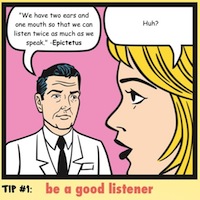
Dating Tips from Ancient Greek Philosophers [Comic]

Ancient Greek philosophers seemed to know it all. So it's no surprise that philosophers like Plato, Aristotle, Epictetus, and Socrates would also speak the language of love fluently. We've compiled some of the most suave and debonaire quotes by Greek philosophers that would put even Cassanova to shame. Read more »

audience-yawning

5 Ways Not to Bore Your Audience

If you are ever to be asked to do a presentation in front of people either at school, work or at a social event like a wedding, you definitely want to do your best so that you are not labeled as a boring presenter. As a trained professional speaker myself, I can let you in on a few secrets and tricks that will help you make it over to the good presenters side rather than the boring speakers camp. Read more »

Lost Hiker

How NOT to Lose your Audience in your Presentation

Have you ever been hiking and the trail suddenly disappears? All of the sudden, you don’t know where you are going. You are lost! You have to struggle to find the trail to push forward or you have to turn back. Like hiking, when speaking the last thing you want is to get lost. Luckily by following some good hiking advice, your speech can keep the audience engaged and on the same happy trail as you. Read more »

mind-control-cropped

3 Nonverbal Hacks to Improve Your Credibility

Credibility is everything. Newspapers that get the facts wrong are torn to shreds and politicians lacking experience don’t get elected, while people in lab coats command our respect immediately. Communication scholars define credibility as being the perception of one’s competence, trustworthiness, and goodwill. But as you probably know, perceptions can be hacked. Read more »